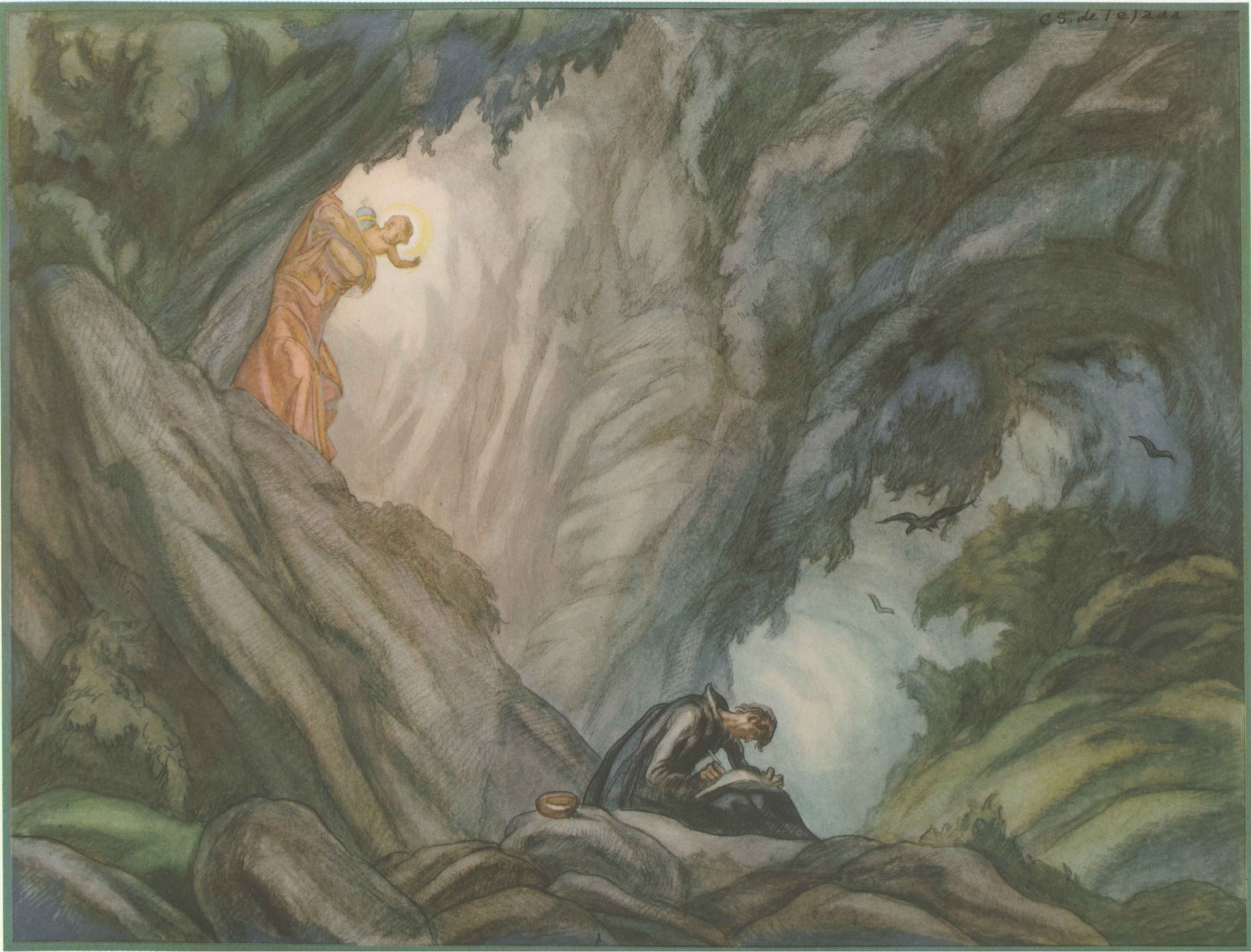
Novena to St. Ignatius of Loyola
Divine Mercy Parish will pray the Novena to St. Ignatius of Loyola from July 22-30. This is in anticipation of the Feast of St. Ignatius on July 31st.
Throughout the novena we will pray on several themes from Ignatian Spirituality, and will include several prayers found in the writings of St. Ignatius. There will also be an opportunity to pray for St. Ignatius’ intercession. As a compliment to the novena prayers, our Pastor, Fr. John Sullivan, S.J, will give several short reflections over the course of the nine days. You will find the links to the reflections below the material for Reading and Reflection.
A novena is nine days of prayer and meditation usually to ask God for special prayer requests. Novenas are often used to ask specific saints to pray for us. A novena is an imitation of the Lord’s command to the Apostles to pray for nine days in anticipation of the coming of the Holy Spirit at Pentecost (Acts 1:14). This pattern of 9 days of prayer is the basis for the novenas we pray today.
All you need to do is say the daily prayers with a sincere heart. The daily prayers can be found below.
ABOUT ST. IGNATIUS OF LOYOLA:
As a young man, Ignatius of Loyola was a soldier in the Basque region of Spain. He had a great conversion while recovering from a battle injury, which led him to becoming a Catholic priest and theologian. He went on to found the religious order of the Society of Jesus (The Jesuits). He envisioned the purpose of the Society to be missionaries – to go where sent in service of Christ and His Church. In addition to the vows of chastity, obedience, and poverty, Ignatius instituted a fourth vow for Jesuits of obedience to the Pope—to engage in projects ordained by the pontiff. Ignatius later wrote the Spiritual Exercises, which is a set of meditations and spiritual practices used as formation for his companions. Even today, the Spiritual Exercises of St. Ignatius are the foundation of the Society of Jesus and all Jesuit apostolates. Ignatius died in 1556, was beatified in 1609, and canonized 1622.
In the Name of the Father, and of the Son, and of the Holy Spirit. Amen +
Our Father……….
(Read and Reflect on the scheduled day)
The Suscipe:
Take, O Lord, and receive all my liberty, my memory, my understanding and my entire will. All I have and call my own. You have given it all to me, To You, O Lord, I return it. Everything belongs to You; do with it as You will. Give me only Your love and Your grace, that is enough for me. Amen
(Mention your request here…)
Heavenly Father, hear my request brought to You by Your servant Ignatius, if it be for Your glory. Grant me the same grace that You gave to St. Ignatius so that I may share his zeal for Christ and for building up Your kingdom. But, if what I seek is not for the glory of God and the good of my soul, grant, I pray, what is more conducive to both. I ask this through Christ our Lord. Amen.
St. Ignatius of Loyola, pray for us.
Anima Christi
Soul of Christ, sanctify me. Body of Christ, save me. Blood of Christ, inebriate me. Water from the side of Christ, wash me. Passion of Christ, strengthen me. O Good Jesus, hear me. Within Thy wounds hide me. Suffer me not to be separated from thee. From the malignant enemy defend me. And bid me come unto Thee, That with all Thy saints I may praise Thee forever and ever, Amen.
Glory be………
In the Name of the Father, and of the Son, and of the Holy Spirit. Amen +
Ad Majorem Dei Gloriam – For the Greater Glory of God
You are the light of the world. A town built on a hill cannot be hidden. Neither do people light a lamp and put it under a basket. Instead, they put it on a stand, and it gives light to everyone in the house. In the same way, let your light shine before others, that they may see your good deeds and glorify your Father in heaven. (Matthew 5:14-16)
- Do I have the glory of God in mind when I go through even the smallest of acts in my day?
- Do I tend to dwell on the past or am I anxious about the future instead of living in the present moment where I am invited to glorify God?
- How can I can offer my life to the glory of God through the beautiful and simple experiences of everyday life.
Contemplatives in Action
I am the vine; you are the branches. If you remain in me and I in you, you will bear much fruit. (John 15:5)
How often through the day do I stop to contemplate the love that Christ has for us in each moment?
- How is my prayer: do I treat it as a bookend for the beginning and end of each day, or does it spontaneously flow from where I meet the Lord throughout the day?
- Follow Ignatius’ example contemplating the love of Jesus and His presence with us when we interact with our family, friends, coworkers, neighbours and strangers and when we are completing even the simplest of tasks in our day?
Finding God in All Things
Where can I go from your Spirit? Where can I flee from your presence? If I go to the heavens you are there? (Psalm 139: 7-9)
- Reflect on times when you have had the experience of God’s active presence in your life and all of creation, finding the sacred in everyday moments, ordinary tasks and in every person you meet.
- Are you able to recognize God’s nearness both in great joys and daily struggles?
- Spend some time each day with the Lord, looking back to recognize where you felt God’s presence, felt gratitude, or missed the mark.
Generosity of Spirit
Each of you should give what you have decided in your heart to give, not reluctantly or under compulsion, for God loves a cheerful giver.(2 Corinthians 9:7)
- Describe a “cheerful giver”?
- What are some of the obstacles which make my generosity reluctant or compulsive?
- How does my relationship with Christ embolden a generosity of spirit with in you?
Men and Women for Others
As the Father has loved me, so have I loved you. Now remain in my love. If you keep my commands you will remain in my love, just as I have kept my Father’s commands and remain in His love. I have told you this so that my joy may be in you and that your joy may be complete. My commandment is this: Love one another as I have loved You. (John 15: 9-12)
- Ignatius had an immense love for Christ and this love for Christ translated into an immense love for others. How might we better imitate St. Ignatius in our love for others and our desire for justice, for the sake of our love of Christ?
- How is your own love of Christ reflected in your love, care and concern of others?
Indifference
But whatever were gains to me I now consider loss for the sake of Christ. What is more, I consider everything a loss because of the surpassing worth of knowing Christ Jesus my Lord, for whose sake I have lost all things. I consider them garbage, that I may gain Christ. (Philippians 3:7-8)
- Ignatius wrote in the Spiritual Exercises that “it is necessary to make ourselves indifferent to all created things.” Ignatius sees that this indifference is needed to be free so that we might respond to God, to serve Him and act in accordance with his love and grace. How do you see this at work in your own life?
- What do you feel an attachment to? Do you sometimes feel attached to your own will? In what areas of our lives can we grow in indifference?
- Do you desire to say, like St. Paul, that “everything is a loss because of the surpassing worth of knowing Christ Jesus”?
Consolation and Desolation
Come to me, all you that are weary and are carrying heavy burdens, and I will give you rest. Take my yoke upon you and learn from me; for I am gentle and humble in heart, and you will find rest for your souls.(Matthew 11:27-29)
- Consolation for St. Ignatius referred to any good, positive feelings of closeness to God, of being loved by Him and of loving Him in return. In your life and practice of faith, are you able note these times and give thanks for them, rejoicing in the Lord for them?
- Desolation includes negative feelings such as laziness, agitation, a sense of being spiritually distant from God or even a lack of any spiritual feeling or emotion altogether. Ignatius wrote that these feelings might be the result of sin, or temptations from the devil. Ignatius encourages us to refrain from making big decisions, to recall times of consolation and to increase our prayer. What do you do in times of desolation?
- How can we more fully trust in God who allows and works in all things for our good.
The Passion, Death & Resurrection of Christ
So then, just as you received Christ Jesus as Lord, continue to live your lives in him, rooted and built up in him, strengthened in the faith as you were taught, and overflowing with thankfulness. (Colossians 2:6-7)
- When you contemplate the Cross and Resurrection of Christ, what thoughts come to mind? What rises up in you heart?
- A great deal of the Spiritual Exercises focuses on contemplating the passion, death and resurrection of the Lord. We are invited to experience and sit with sorrow, regret and even real confusion over having offended Christ. Yet we are then quickly remined that we are sons and daughters of God, espoused to Christ and have been raised and restored to life. Take some time to recall your own failings with sorrow and regret. Then also reflect on the life and glory we have in Christ, with gladdens and gratitude.
Contemplation to Attain Love
God is love, and those who abide in love abide in God, and God abides in them. Love has been perfected among us in this: that we may have boldness on the day of judgement, because as he is, so are we in this world. There is no fear in love, but perfect love casts out fear; for fear has to do with punishment, and whoever fears has not reached perfection in love. We love because he first loved us. (1John)
- On “Contemplation to attain love,” Ignatius writes “First, Love ought to manifest itself more by deeds than by words. Second, Love consists of a mutual communication between two persons.” Here Ignatius is calling to mind that God “desires to give [us] even His very self” and that we, in turn are called to give God “all [our] possessions, and [ourselves] along with them. This mutual exchange is at the heart of Ignatius’ teaching. Following the example of St. Ignatius, let us return to Christ all He has given us: our will, liberty, understanding, memory, our whole selves, our dreams, our possessions. Reflect with an open heart, how we might receive not only His good gifts, but Christ Himself.
1st Reflection from Fr. John
2nd Reflection from Fr. John
3rd Reflection from Fr. John
4th Reflection from Fr. John